Published November 14, 2025
The Ocean's Secret Language: Understanding Wave Height and Period

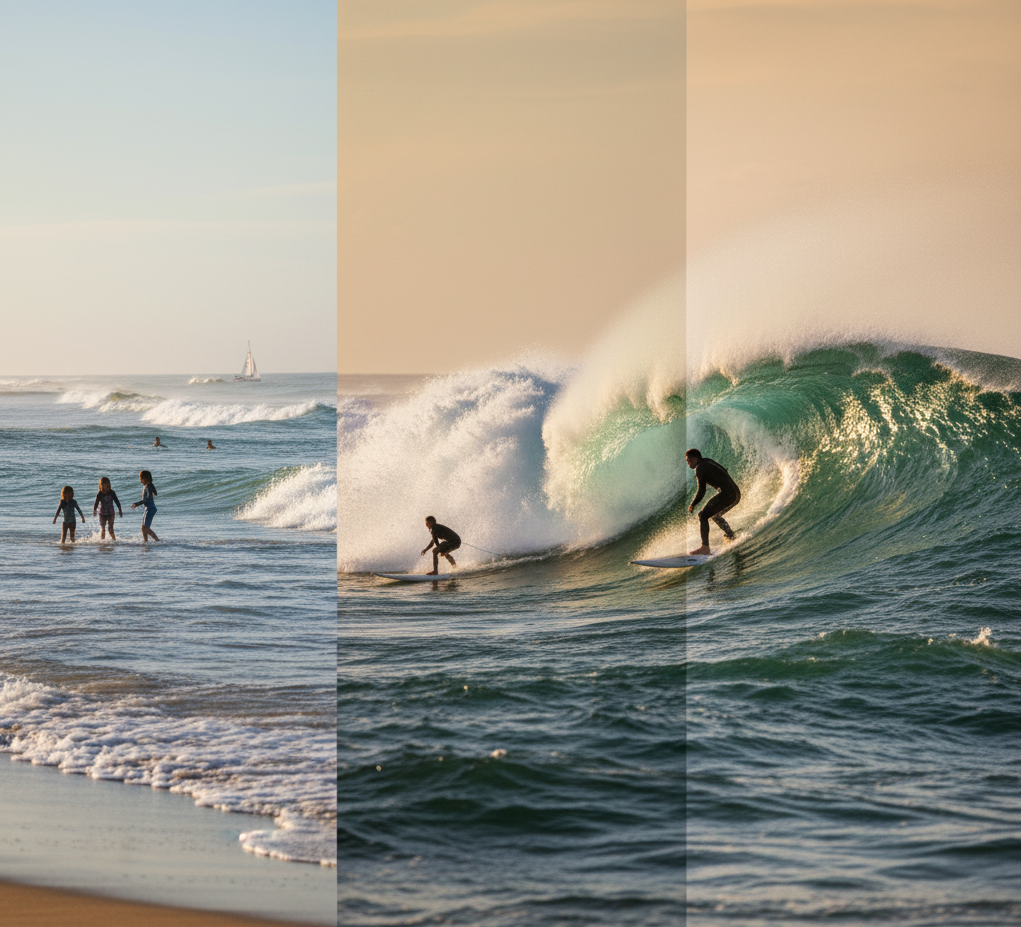
When you stand on the shore, gazing out at the vast ocean, you’re witnessing an ancient, intricate dance powered by wind, water, and gravity. Waves are so much more than just rolling walls of water—they are pure energy, shaping our coastlines, influencing where we swim, and determining the thrill of a perfect surf session.
To truly appreciate the ocean's power and predict your day on the water, you only need to understand two key numbers: wave height and wave period.
What is Wave Height? (The Size)
Simply put, wave height is the vertical distance from the very top of the wave (the crest) to the very lowest point (the trough). It's the most intuitive measurement of a wave's size.
- Small (1–2 feet): Gentle, inviting waves perfect for casual splashing and a relaxing day by the water.
- Moderate (3–5 feet): The common, enjoyable size found at many popular beaches—great for bodyboarding and novice surfing.
- Large (10+ feet): True giants, often associated with storms or distant, powerful swells, carrying immense, raw energy.
What is Wave Period? (The Rhythm and Power)
The wave period is often the most misunderstood, yet most crucial, factor. Measured in seconds, it tells you the amount of time that passes between one wave crest and the next. Think of it as the heartbeat of the ocean. It reveals the wave's power and its origins.
|
Period (Seconds)
|
Description
|
Origin & Feel
|
|
Short (4–6s)
|
Close and choppy
|
Caused by local winds. Feels bumpy and messy, poor for surfing, and makes for a rough boat ride.
|
|
Moderate (8–10s)
|
Spaced out, rolling
|
Waves that have traveled a bit further. Kinder on swimmers and easier for beginner surfers.
|
|
Long (12–20+s)
|
Far apart, powerful
|
Groundswell waves that have traveled across entire oceans. These carry the most energy and create the clean, classic surf lines we love.
|
The secret to a great day on the water isn't just the height; it's the combination of both height and period.
- For Swimmers: A 3-foot wave with a short, 5-second period will feel like a jarring, exhausting chop. But a 4-foot wave with a long, 15-second period will be a gentler, more rhythmic roll.
- For Surfers: A smaller wave with a long period has traveled farther, organized its energy, and will stand up taller with more force when it hits the shallow water. It will always pack a bigger punch than a large, choppy wave with a short period.
- For Boaters: Long-period swells are like cruising over rolling hills. Short, choppy waves, however, lead to a constant, jarring up-and-down motion that is uncomfortable for everyone on board.
- For Safety: Lifeguards rely on these numbers. Long-period swells are the engine behind powerful rip currents and often signal a higher risk for flooding and erosion.
Conclusion
The next time you approach the shoreline, don't just see a random wall of water. Look closer and listen. Wave height tells you the size, but wave period reveals the ocean's true rhythm, power, and history.
By learning to read these two numbers, you unlock the ocean's secret language and can better predict your experience—whether you're planning to surf a powerful swell, take a peaceful swim, or simply admire the magnificent beauty of the sea.
Tip: Take a moment at the shoreline. Close your eyes and count the seconds between the crests of the breaking waves. You’ll start to feel the powerful, rhythmic heartbeat of the ocean yourself.