
Published February 3, 2026
When Ocean City and Bethany Beach Built Their Protective Dunes — and Why They Matter

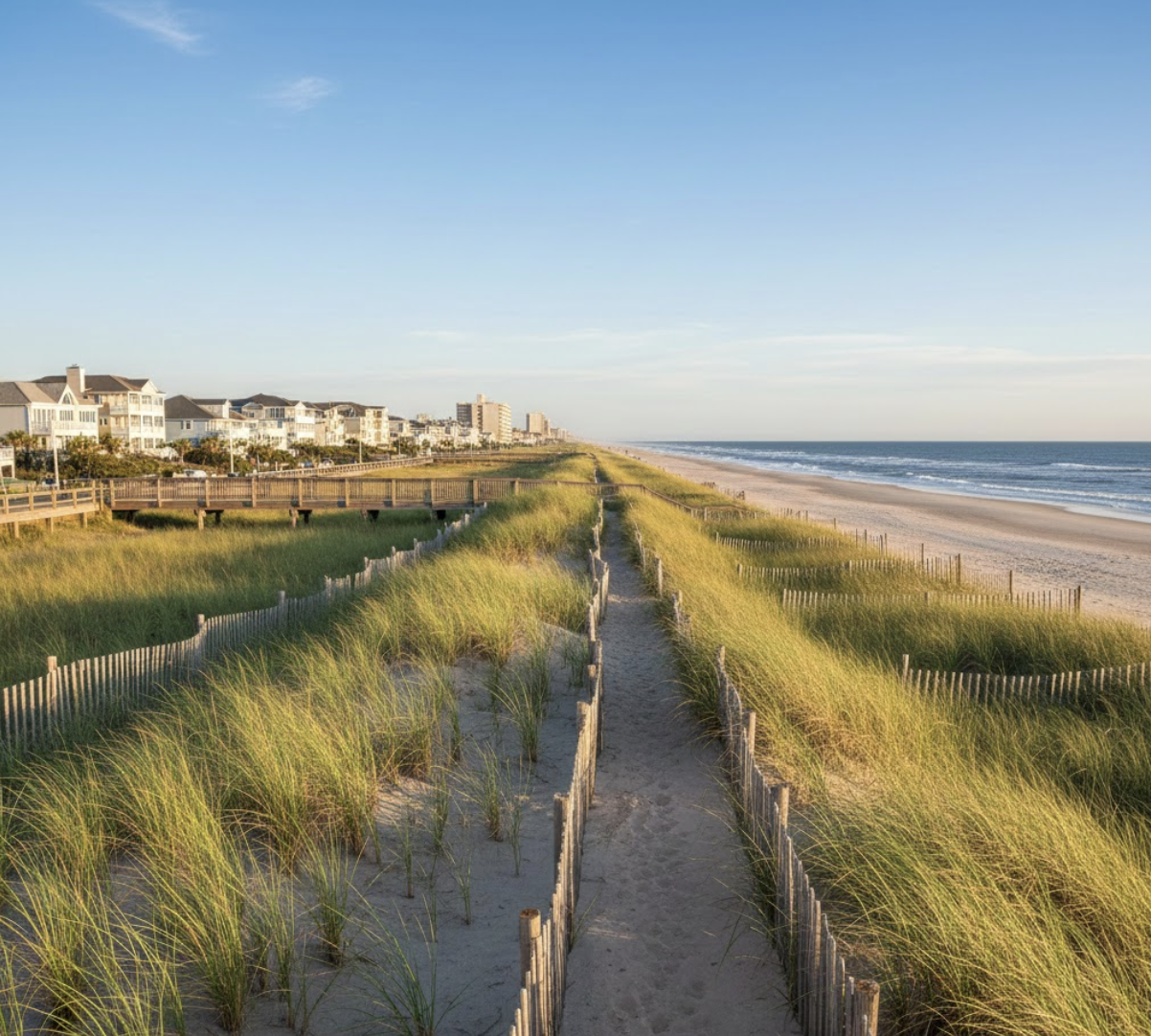
If you’ve walked the shoreline in Ocean City, Maryland, or Bethany Beach, Delaware, you’ve seen them: raised sand ridges reinforced with dune fencing, planted with beach grass, and connected by crossover walkways.
They aren’t just scenic backdrops.
These dunes are engineered storm-protection systems—designed to slow erosion, absorb wave energy, and protect everything landward of the beach.
One of the most common questions we hear at The Windrow Group is:
“When were these dunes actually installed?”
The answer depends on the town, but the history matters more than most people realize.
Ocean City, Maryland
Completed: 1994
Ocean City’s modern dune and beach protection system is part of the Atlantic Coast of Maryland Storm Protection Project, often referred to locally as the town’s long-term beach replenishment and storm protection program.
According to Ocean City’s Engineering Department, the project includes:
- Constructed dunes
- Dune fencing and vegetation
- Dune crossover walkways
- The Boardwalk seawall
The city, county, and state formally accepted responsibility for operating and maintaining the completed project in 1994.
The Maryland Department of Natural Resources (DNR) also confirms that the initial construction of all major project elements—including the engineered beach berm and dune system (particularly north of the Boardwalk)—was completed in 1994. These features continue to serve as the backbone of Ocean City’s coastal storm protection strategy today.
In plain English:
Ocean City’s protective dunes, as we know them now, were completed in the early 1990s, finalized in 1994, and have been actively maintained through periodic renourishment ever since.
Ocean City’s protective dunes, as we know them now, were completed in the early 1990s, finalized in 1994, and have been actively maintained through periodic renourishment ever since.
Bethany Beach, Delaware
First Constructed: 2008
Bethany Beach’s engineered dune system is tied to the U.S. Army Corps of Engineers (USACE) and Delaware DNREC coastal storm damage reduction efforts.
According to the U.S. Army Corps of Engineers, the Bethany Beach / South Bethany storm damage reduction project was first constructed in 2008.
Town communications echo this timeline, describing the project as a wide beach backed by a constructed dune system, following the Corps’ standard storm protection template.
In plain English:
Bethany Beach’s modern dune line is a 2008 project, with periodic repairs and sand renourishment continuing to this day.
Bethany Beach’s modern dune line is a 2008 project, with periodic repairs and sand renourishment continuing to this day.
Why Dunes Became a “Must-Have” Defense on the Delmarva Coast
Beaches are naturally dynamic. Sand shifts with seasons, storms, tides, and wind. But once towns build homes, roads, utilities, and boardwalks behind the shoreline, a reliable buffer becomes essential.
That’s where engineered dunes come in.
Dunes serve several critical functions:
- They act as the first line of defense against storm surge and wave run-up
- Beach grass stabilizes dunes by trapping windblown sand and reducing surface wind velocity
- Fencing, planting, and crossover systems protect the dune while still allowing safe public access
Together, these elements form a system—not just a pile of sand.
Dunes Don’t Stop Erosion — They Buy Time (and Protect Property)
One common misconception is that dunes permanently stop erosion.
They don’t.
What they do is reduce damage during major storm events and help beaches recover faster by holding sand in a stable, elevated form.
You can see how active this process is in Bethany Beach. The U.S. Army Corps of Engineers and DNREC periodically place sand to restore the beach and dune template. For example, sand placement was completed in July 2023 as part of Delaware’s ongoing coastal storm protection updates.
Maintenance isn’t a sign of failure—it’s part of the design.
What This Means for Buyers, Owners, and Investors
From a real estate perspective, protective dunes—and the programs that maintain them—matter because they influence:
- Risk and resilience (storm exposure, flood concerns, post-storm recovery)
- Long-term beach quality (width, usability, and overall beach experience)
- Municipal planning (access points, dune crossovers, and future projects)
Understanding these systems helps buyers and owners make more informed decisions about long-term value—not just the view from the deck.
At The Windrow Group, we help clients understand not only the home, but the coastal infrastructure protecting it.
Quick Recap: The Dates
- Ocean City, Maryland: Storm protection and dune system completed in 1994
- Bethany Beach, Delaware: Engineered dune system first constructed in 2008
If you’re buying, selling, or investing along the coast, these details matter—and we’re here to help you navigate them with clarity and confidence.